
FV-30
An extensional rheometer to measure extensional viscosity and control the stringiness of your products.
A rheometer that precisely analyzes filament formation and breakage to help you understand, optimize and control the behavior of your formulations under real-world conditions.

Results in less than one minute
From test initiation to the display of extensional viscosity curves.

Exclusive distributor
Rheonova is the exclusive distributor of the FV-30 in Europe.
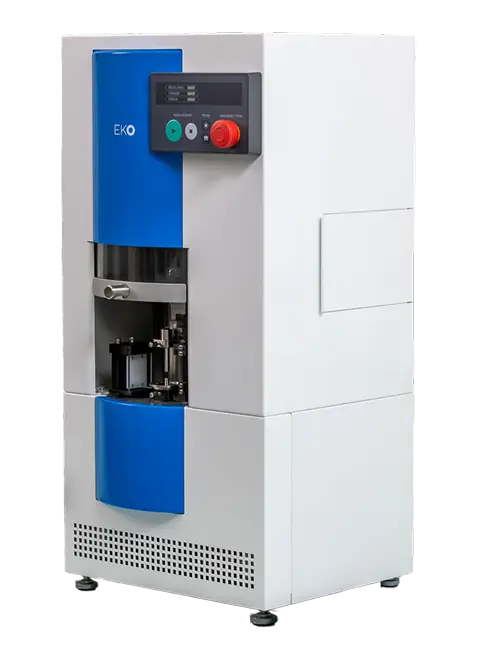
Image acquisition
at 500 frames/s
Precise capture of filament formation and breakage, at 500 frames per second, for dynamic analysis of filaments that are inaccessible with a conventional CaBER.
Automatic
data analysis
Immediate processing thanks to image analysis coupled with a high-precision force sensor.
Small sample
volume
Less than 1 ml required, ideal for high-value products.
Adaptable
to all samples
4 and 6 mm geometry diameters to accommodate a wide variety of products: low-viscosity inks, elastic adhesives, paints, molten polymers and cosmetic formulations…
The FV-30 helps identify and resolve stringing issues in your processes
FV-30 Applications: Stringing, extensional viscosity, and adhesion in printing, coating, and adhesives.
Paints and screen printing inks
Characterize the stringiness of your screen printing inks and metallic pastes to correct printing defects in metallic pastes for batteries or engine sealants…
Roll coating
Minimize misting and improve deposit quality in roll coating.
Die coating
Optimize the extensional rheology of your formulations for battery electrodes and separators to reduce thickness irregularities and ensure deposit uniformity in die coating.
Filling, bottling, and the cosmetics, food, and pharmaceutical industries
Prevent stringing and breakage at the end of the cycle.
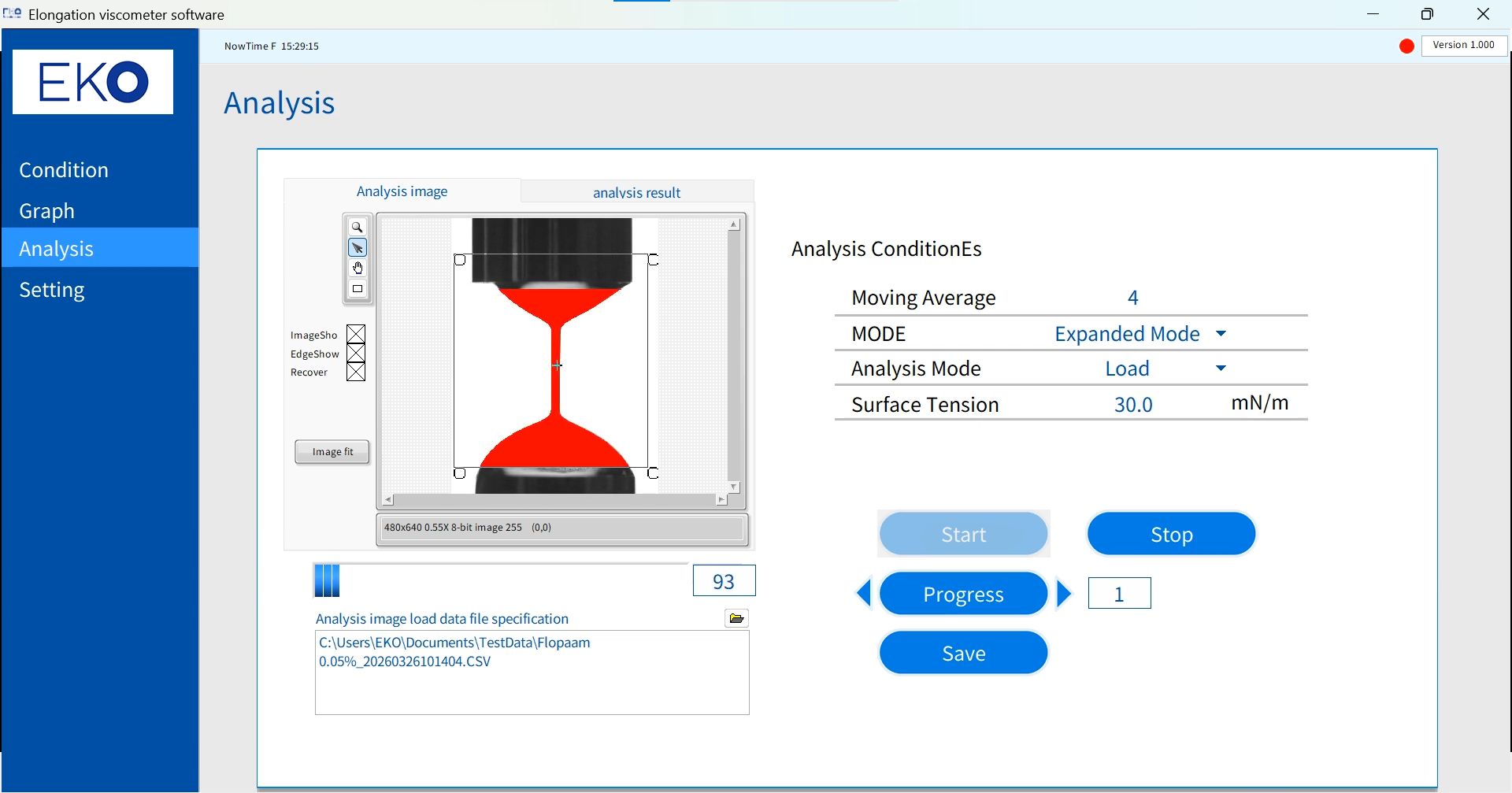
FV-30 Software: Live visualization and automatic analysis of extensional viscosity curves
Easily create and reuse your protocols, obtain automatically analyzed results as soon as the test ends, and compare your data with a single click. Thanks to real-time visualization, you can directly monitor the fluid’s behavior for quick and efficient interpretation. Curves for extensional viscosity, force and filament diameter are automatically generated and exported to Excel for inclusion in your quality reports or regulatory filings.
The FV-30 by the numbers
To get
your results
< 1 min
To minimize
the sample volume
< 1 mL
To precisely analyze
filament dynamics
500 frames/s
To replicate realistic
deformation conditions
100 mm/s
For precise force measurement: simultaneously measure the flow and tack of your formulations.
1 mg
FV-30 vs CaBER 1: Technical comparison
| Features | FV-30 | CaBER 1 |
|---|---|---|
| Viscosity range | > 200 mPa.s (depending on the sample) | 10 - 10⁶ mPa.s |
| Adjustable probe speed | 0.1 - 100 mm/sec | No adjustable speed |
| Integrated normal strength measurement | Yes (using load cell technology) | No (paid option) |
| Camera visualization | Yes (side-view camera with a 10 mm field of view) | No (single-point laser) |
| Simultaneous measurement: viscosity + strength | Yes | No |
| Cohesion/tackiness evaluation | Yes (directly via the standard strength sensor) | No (indirect calculation) |
| Full visualization of the filament | Yes (vertical camera field of view of 10 mm) | No (midpoint only) |
| Stretching speed control | 0.1 - 100 mm/s | Fixed (~50 ms step) |
| Sample volume | < 1 ml | <0.2 ml with special cell |
| Temperature control | No | Yes (0-80 °C) |
| Diameter resolution | 16 μm | 8 μm |

Shaping
rheology solutions
Request a demo
of the FV-30
Expert Insight

Guillaume Darsy
Specialist in fluid rheology and rheometer training
My product forms threads, even though its viscosity is fine.” We hear this statement regularly, whether in the food and beverage, cosmetics, or ink industries. It highlights a reality that’s often overlooked: viscosity alone isn’t enough to predict a material’s behavior. Stringing behavior, on the other hand, is governed by extensional rheology, a property that the vast majority of manufacturers and laboratories don’t measure due to a lack of suitable tools. The FV-30 gives them access to this data for the first time, all within a device designed for quick and easy use. For many, it’s a revelation and an immediate tool for improving their formulations or quality control.
De l’analyse à la performance, notre approche transforme vos défis rhéologiques en résultats concrets
Discover our complete product line, including easyRheo and TriPAV complementary instruments designed to meet all your rheology needs, from the laboratory to quality control.
Our Products
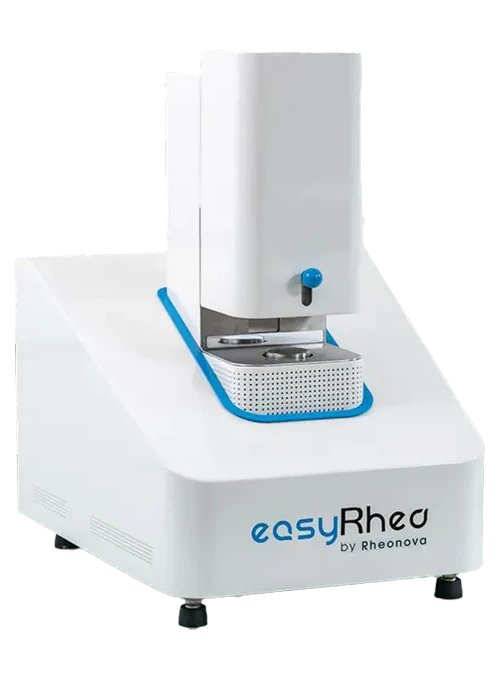
easyRheo
An intuitive rheometer that simplifies your measurements

Made in France
Quick setup

Intuitive software
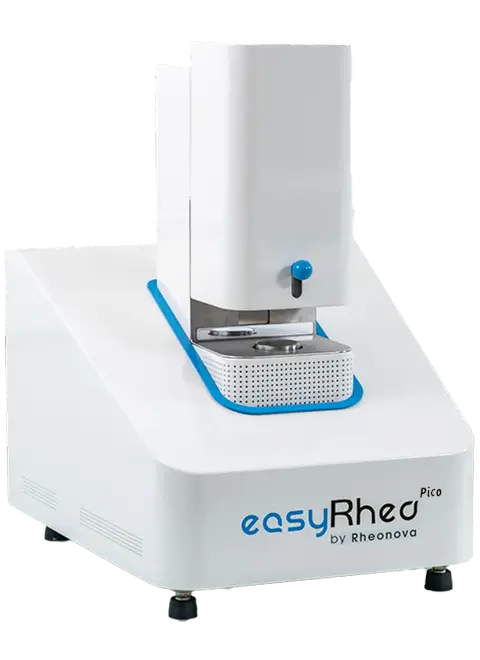
easyRheo Pico
A rheometer that pushes
the limits of rheometry

Unprecedented data

Low volume
Reduced handling time
Made in France
TriPAV
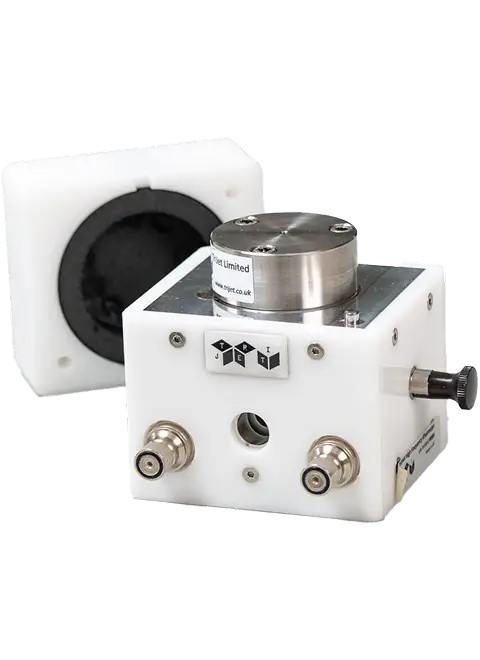
A high-frequency rheometer for inks, coatings, and biofluids

Frequency range from 1 to 10,000 Hz

1 mPa·s and above, to cover fluids with very low viscosity up to solids
Exclusive distributor in France
Frequently asked questions about the FV-30
What is the difference between the FV-30 and a rotational rheometer for measuring stringiness?
A rotational rheometer measures shear behavior (viscosity, G’, G’’). Stringiness is an extensional phenomenon: it cannot be measured using shear. The FV-30 is specifically designed to stretch the fluid and measure its resistance to elongation extensional viscosity, tack, and filament elasticity.
Can the FV-30 replace a CaBER?
The FV-30 covers the same applications as the CaBER while natively adding normal force measurement and a high-frequency side-view camera. For very low-viscosity fluids (< 200 mPa.s), the CaBER may still have an advantage depending on the samples. However, for most inks, adhesives, and polymer formulations, the FV-30 provides more information than the CaBER in a single test.
What types of products can be analyzed with the FV-30?
Printing inks (screen printing, flexography, inkjet), paints and coatings, adhesives and sealants, molten polymers (blow molding, stretching, extrusion), cosmetic formulations, bio-inks for 3D printing, sauces and structured food and beverage formulations. Any product for which elongation behavior is critical to your process.
What exactly does the FV-30 measure, and what data does it provide?
The FV-30 simultaneously measures the filament diameter as a function of time (500 frames/s) and the normal force exerted by the filament (resolution: 1 mg). This data can be used, among other things, to calculate extensional viscosity, tack, or filament break time.
Do you offer demonstrations using our own samples?
Yes. Rheonova offers demonstrations of the FV-30 using your own samples, either on-site or in our laboratory. Contact us to schedule a session with your formulations.